Backstitch for Hand Sewing
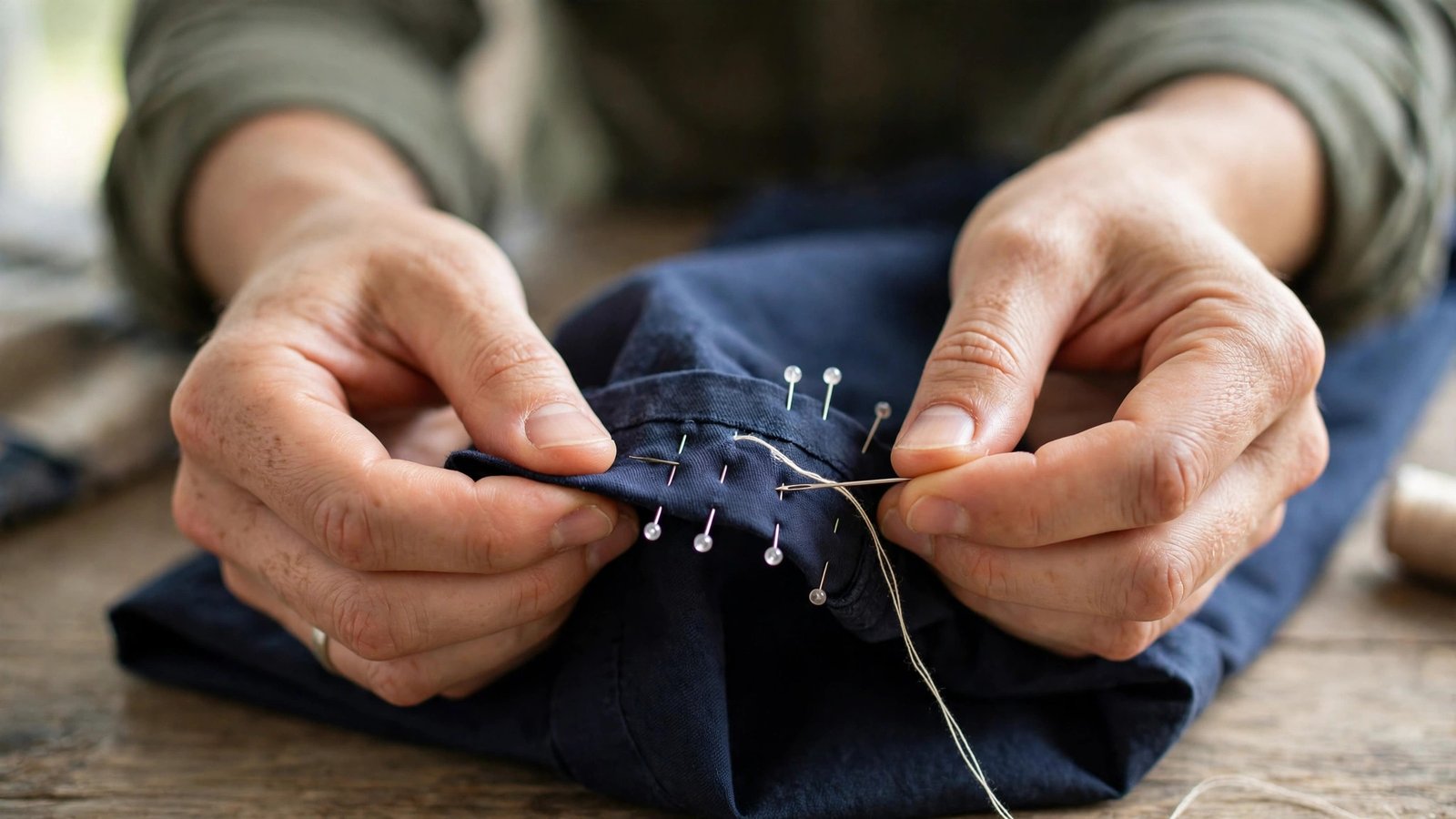
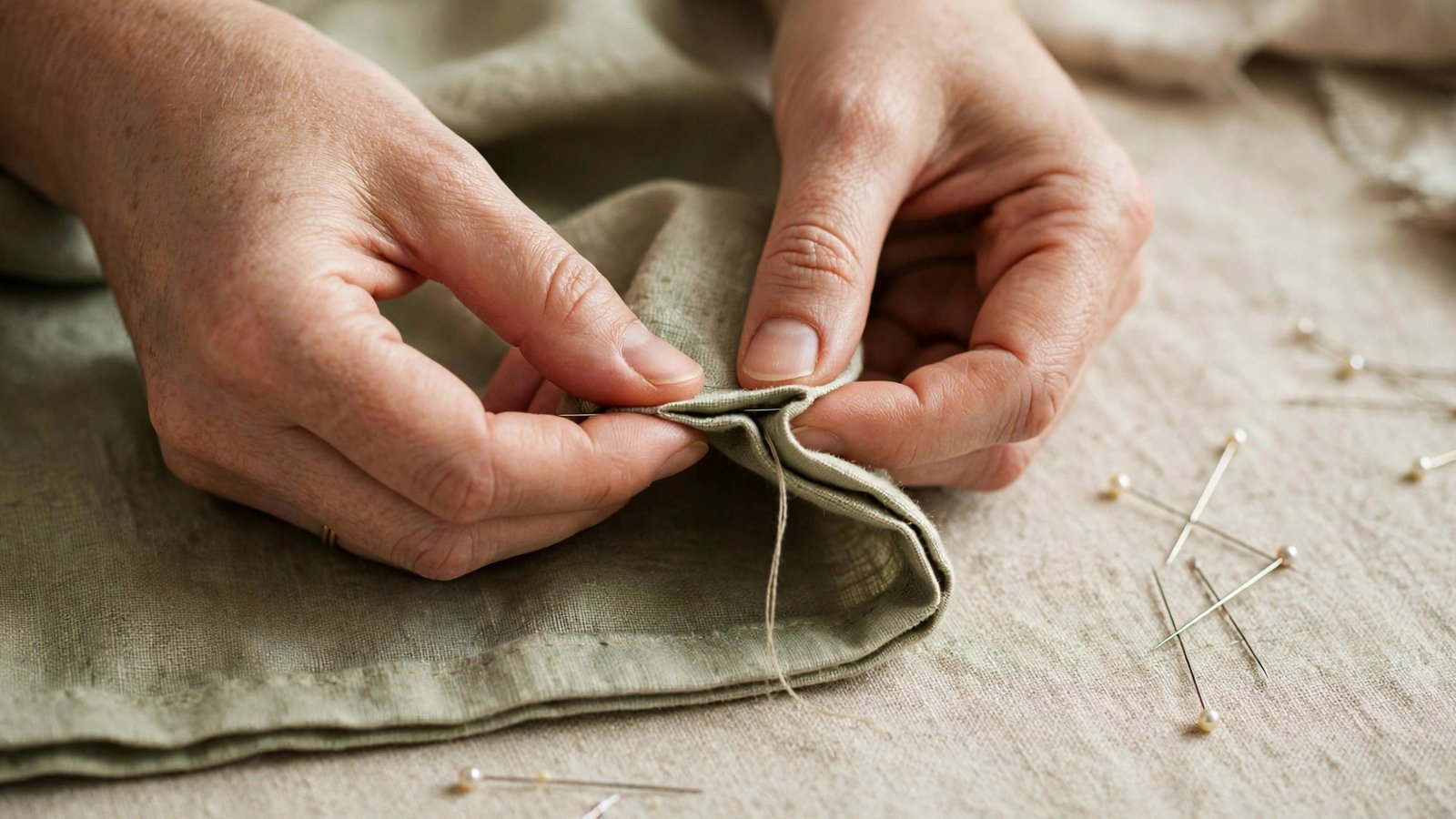
The backstitch is the strongest basic hand stitch, and it is the hand stitch to reach for when a seam must hold without a machine. On the top of the…
20 practical guides in this category, each with materials, steps, tips and common mistakes.
The backstitch is the strongest basic hand stitch, and it is the hand stitch to reach for when a seam must hold without a machine. On the top of the…
A beginner sewing kit should cover the basic jobs: cutting, pinning, marking, stitching by hand, and, if you have a machine, stitching by machine…
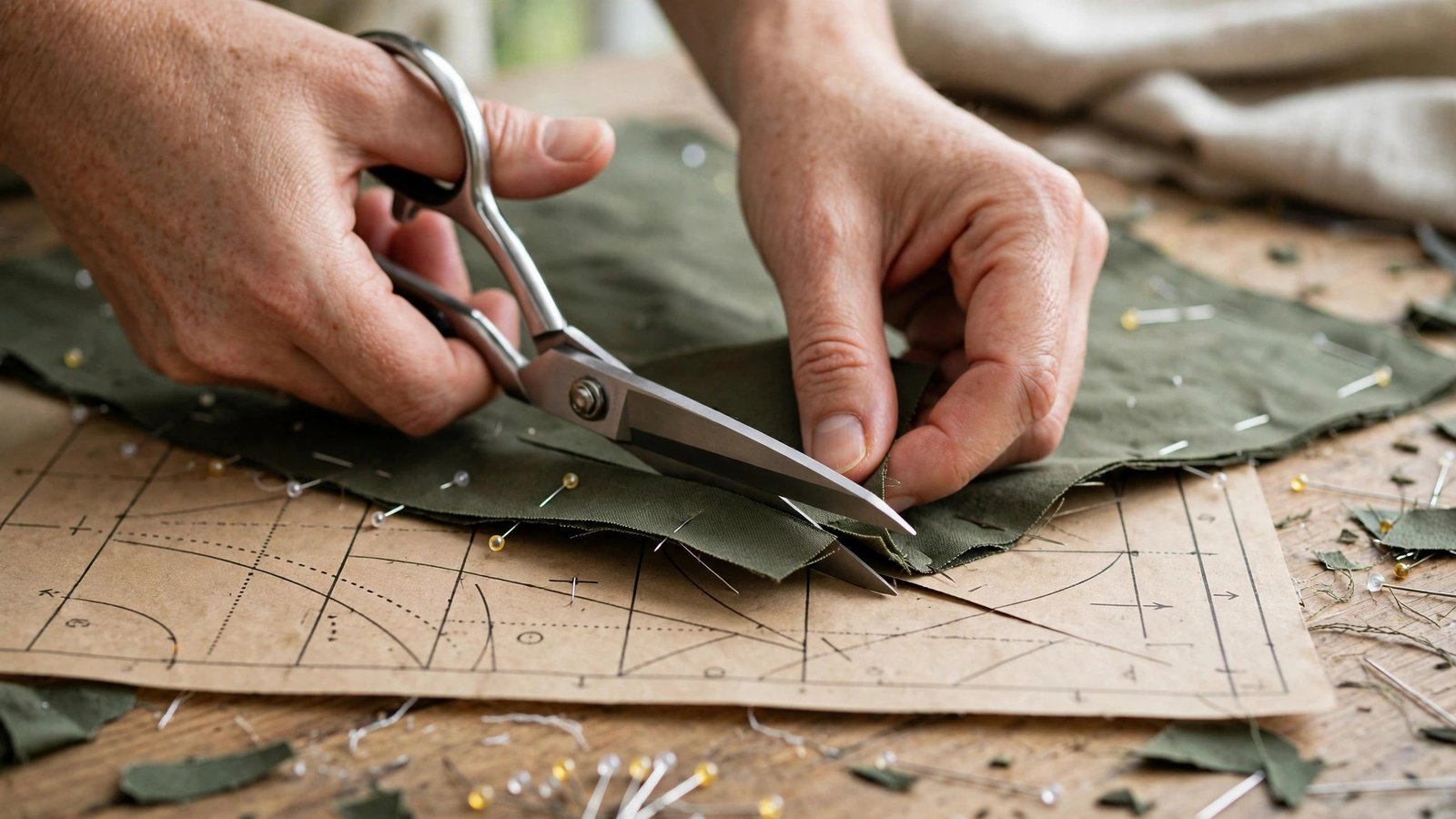
Cutting fabric accurately is the step that decides whether pattern pieces fit together. A piece cut a few millimetres too narrow will not match its…
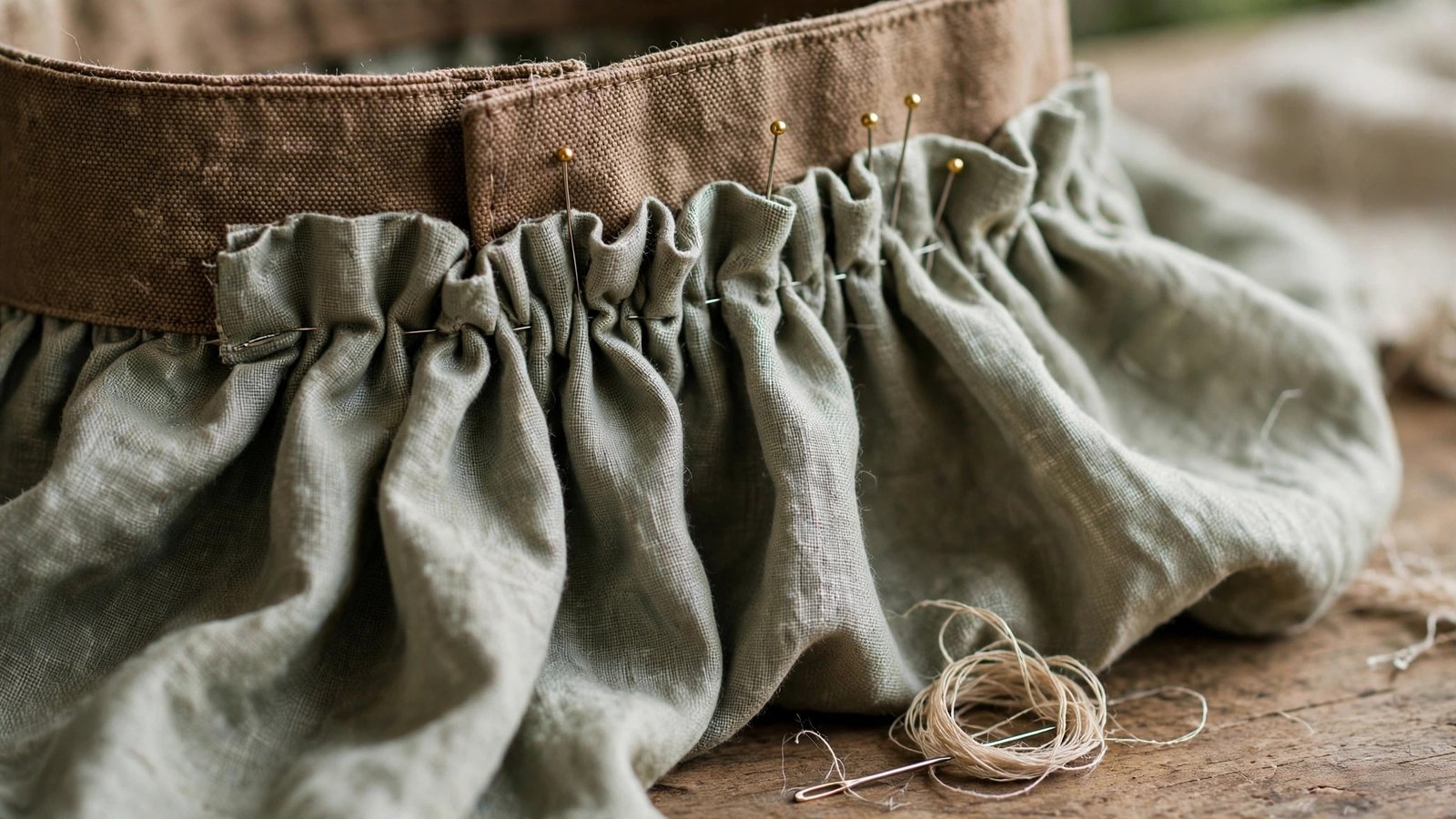
Gathering draws a longer piece of fabric up into a shorter length, forming soft folds that fit into a smaller piece, such as a skirt waistband, a…
Hemming pants by hand gives a neat, soft finish that a machine hem cannot always match, especially on dress trousers where a visible machine line…
Threading a sewing machine means guiding the top thread through a set path from the spool to the needle, then bringing the bobbin thread up through…
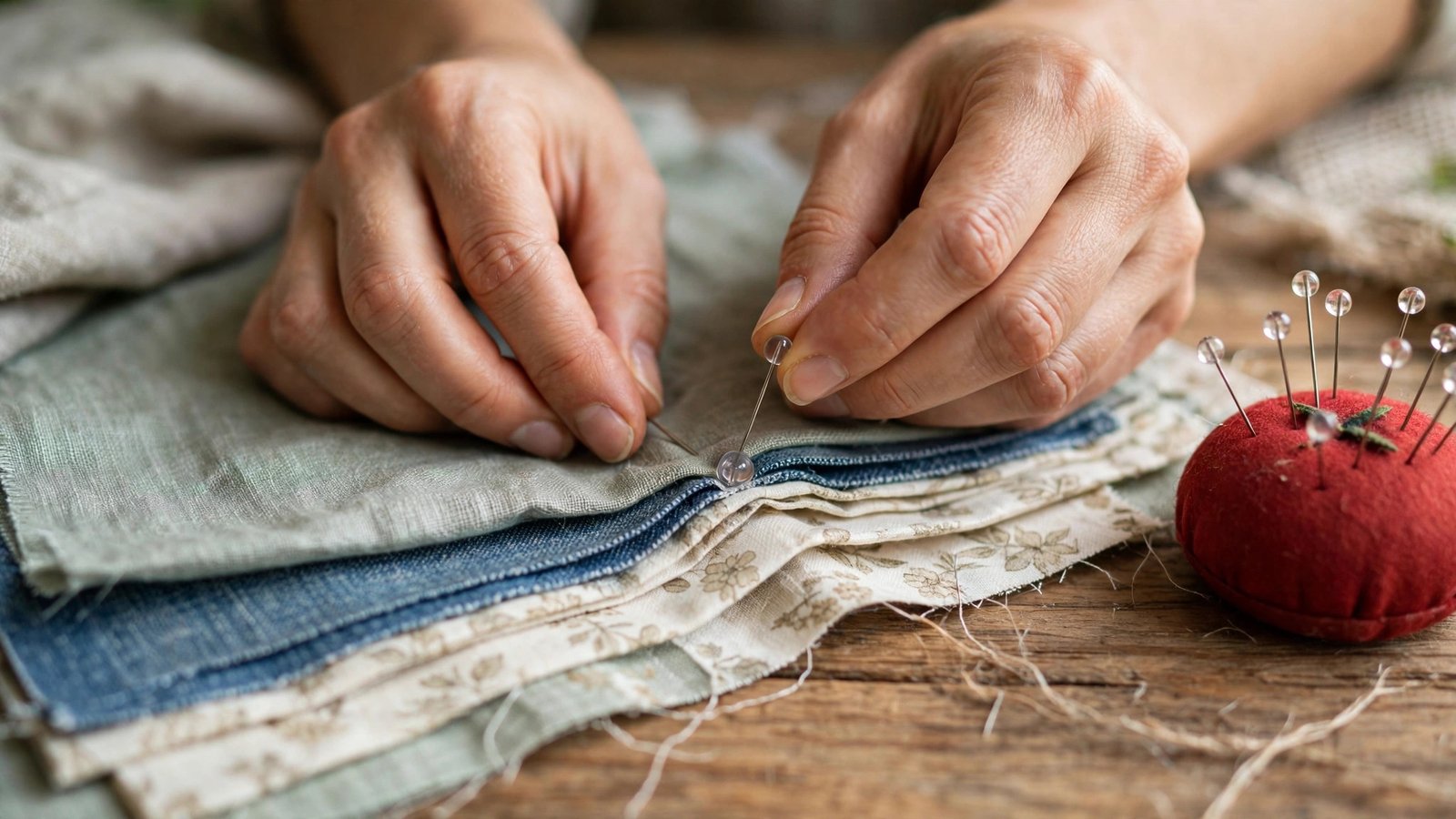
Pinning holds fabric layers together so they do not shift while you sew. Good pinning keeps edges aligned, matches notches and seams, and stops…
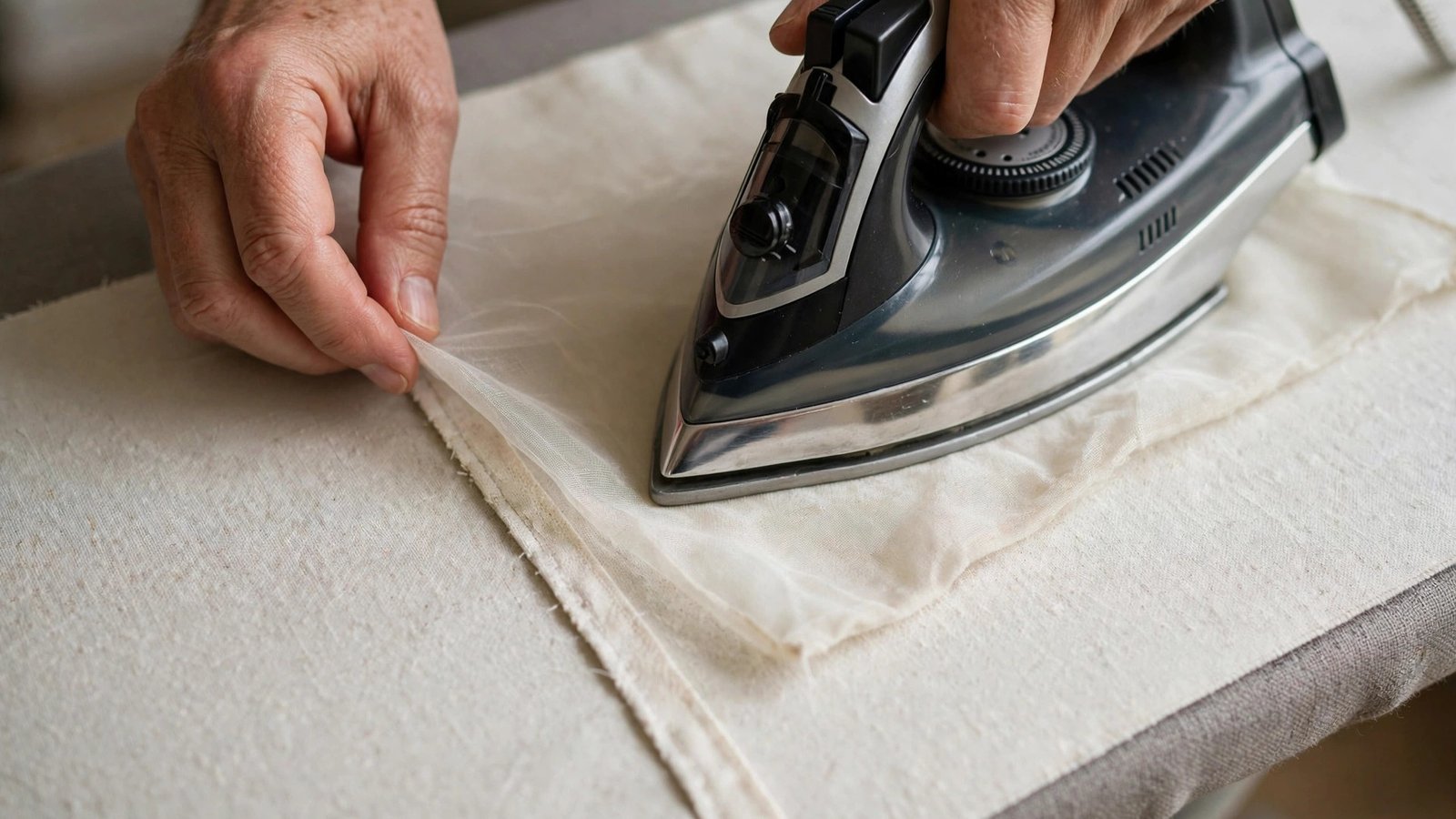
Pressing and ironing both use heat, steam, and pressure, but they are not the same action, and the difference matters in sewing. Pressing means…
The running stitch is the simplest hand stitch, and it is the first stitch most sewists learn. The needle passes in and out of the fabric in a…
Seam allowance is the distance from the edge of the fabric to the line of stitching that joins two pieces. It is the strip of fabric that sits beyond…
Sewing a button by hand is a small job that makes a large difference to how a garment looks and works. A button that is sewn firmly, at the right…
A buttonhole is a reinforced slit in fabric that lets a button pass through and hold a garment closed. It looks simple, but it needs accurate…
Curves and corners test sewing accuracy, because a straight seam can hide small errors, while a curve or a corner shows them at once. A curve that is…
A dart is a way to shape flat fabric so it fits a curved body. It is a fold of fabric, stitched along two lines that meet at a point, taking in…
Basic maintenance keeps a sewing machine running smoothly, stitching evenly, and lasting longer. Most maintenance is simple: clean lint, check…
Tension is the pull that the sewing machine puts on the thread as each stitch forms. The top thread passes through tension discs, and the bobbin…
Slip stitch is a hand stitch that closes a hem or an opening so the stitches are barely visible from the outside. The needle slips inside a fold of…
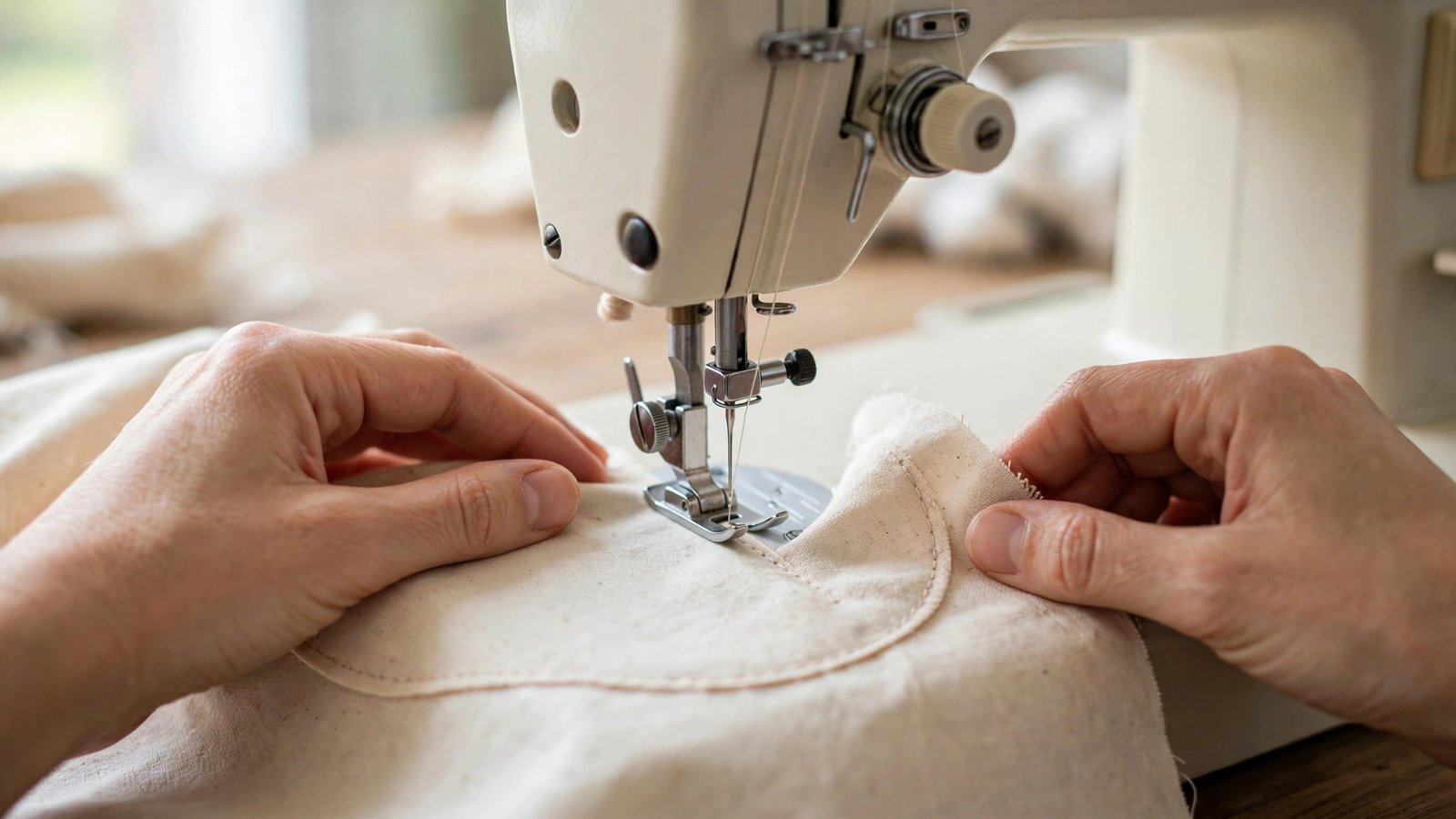
The straight stitch is the basic stitch on a sewing machine, and it is the stitch you will use for most seams. It is a single line of interlocking…
Topstitching is a line of stitching sewn on the outside of a garment, close to a seam or edge, where it can be seen. It has two jobs: it holds layers…
The zigzag stitch moves the needle from side to side as it sews forward, forming a row of angled stitches that cover width as well as length. That…
Sign-up opens at launch.
Get new sewing guides by email. The working signup list is set up at launch, so this form does not subscribe you today.