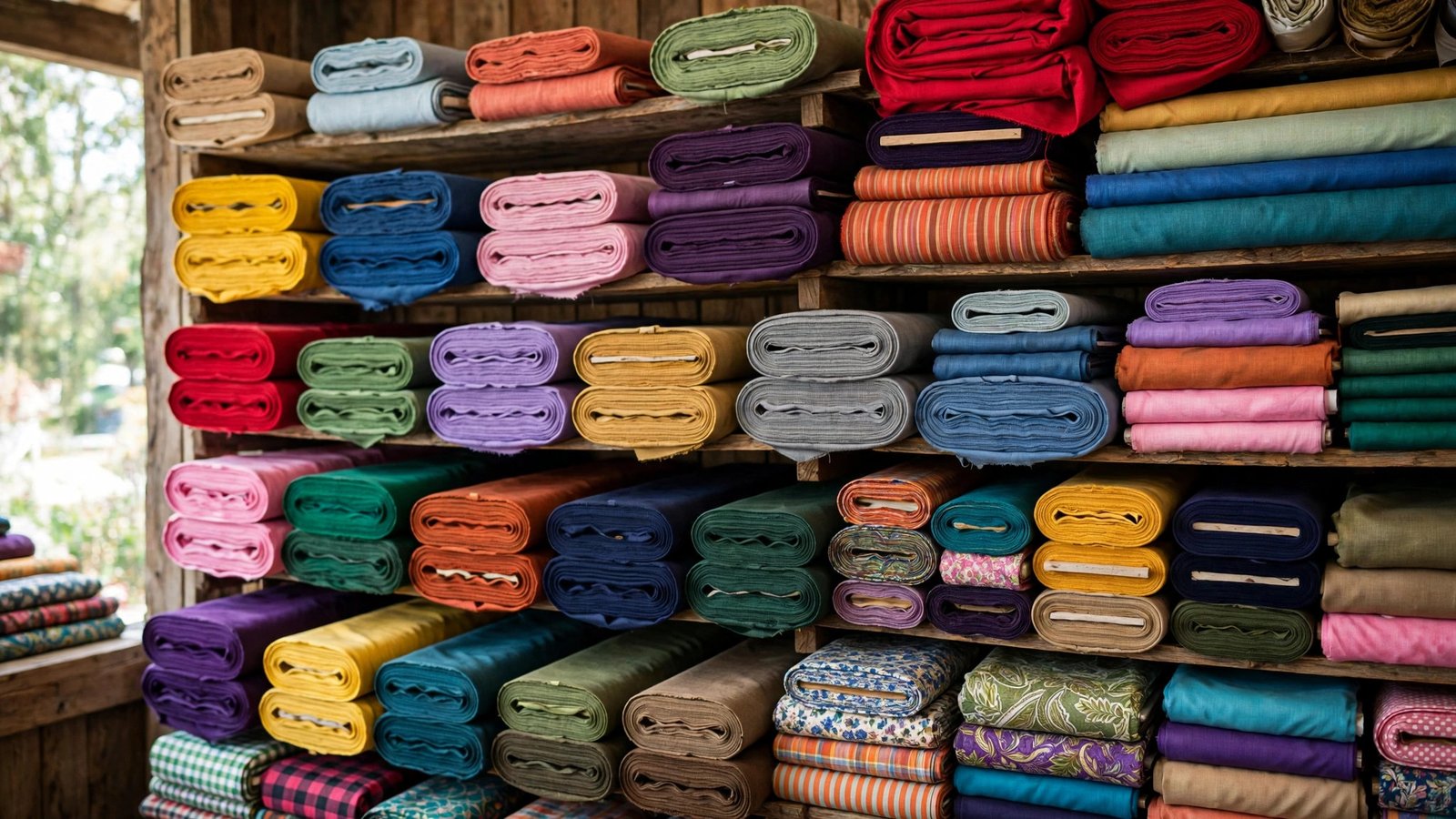
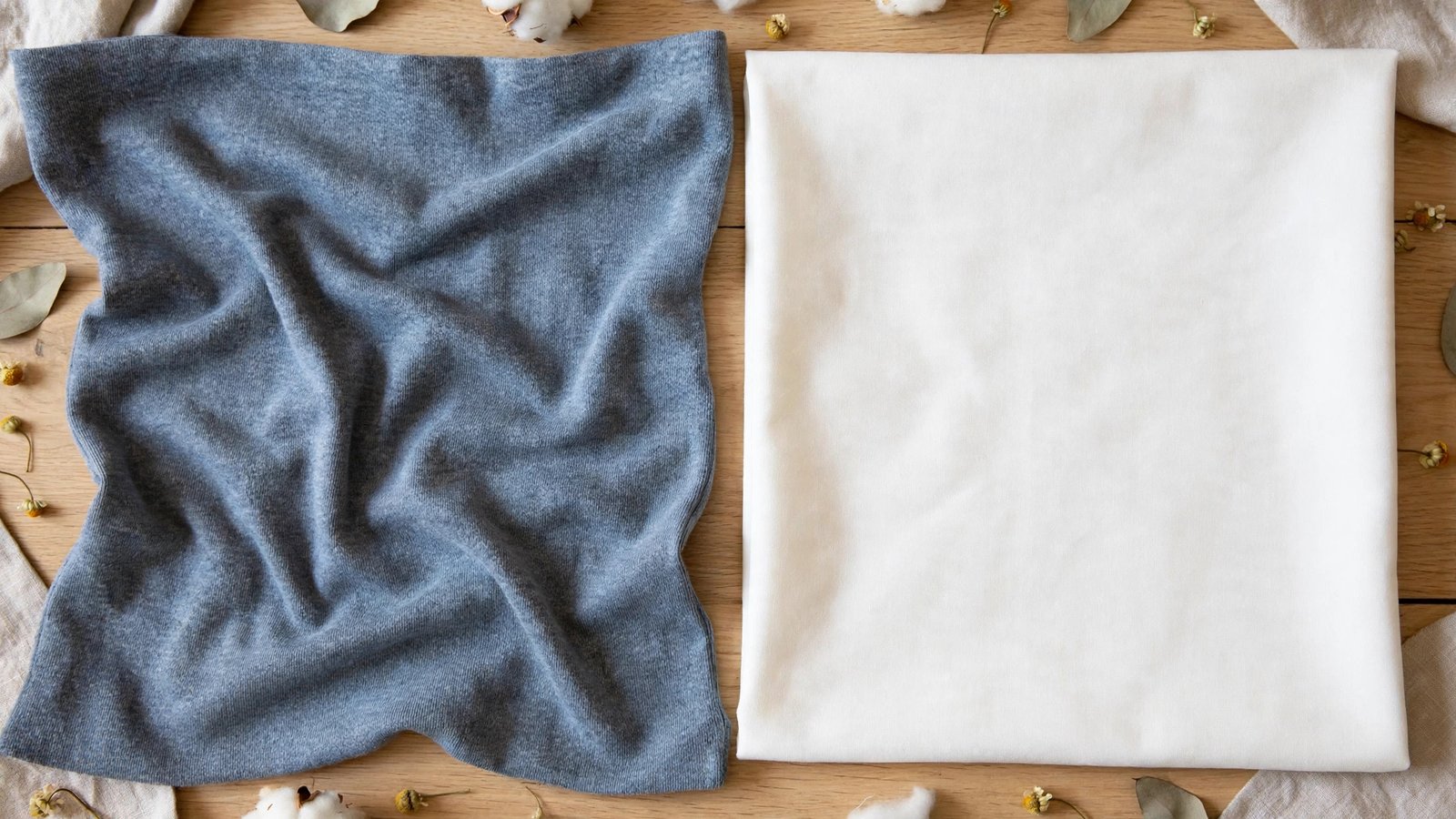
Fabric grain is the direction of the threads in a piece of cloth, and it decides how a garment hangs, stretches, and keeps its shape after washing. Woven cloth has lengthwise threads that run from one cut end to the other, and crosswise threads that run from selvedge to selvedge. The line where those two sets meet at a right angle is the straight grain, and most pattern pieces are placed on it for a reason.
When a piece is cut off grain, the garment can twist, flare in unexpected places, or stretch out of shape during wear. A skirt cut off grain may swing to one side, and a shirt bodice cut off grain may pull across the chest. This guide explains straight grain, cross grain, and bias, how to find each one in woven and knit cloth, and how to lay out and cut so the grain stays true.
What you need
You need only simple tools to check grain, but a flat table makes the work far easier.
- Fabric, pressed and laid flat
- Tape measure or long ruler
- Pins and a fabric marker or chalk
- A right angle tool, such as a quilter square, if you have one
- Scissors and pattern pieces
- A scrap for pull tests
Step by step
Find the selvedge and the grain lines
Start by finding the selvedge, which is the finished edge that runs along each side of the cloth. The straight grain, also called the lengthwise grain, runs parallel to the selvedge. The cross grain runs at a right angle to the selvedge, from one side of the cloth to the other. In a good piece of cloth, those two directions cross at a right angle, and the cloth lies flat without rippling.
Pull the cloth gently along the straight grain, then across the cross grain, and notice the difference. The straight grain should feel firm and move little, while the cross grain may give a little more. Pull on the diagonal and you will feel much more stretch: that is the bias. Those three pulls give you a quick sense of the cloth before you measure anything.
Check whether the cloth is on grain
Fold the cloth so the selvedges meet and the cut ends line up. If the cloth is on grain, the fold lies flat and the ends match. If one end sticks out or the cloth ripples along the fold, the grain may be off, often because the cloth was pulled during printing, drying, or rolling. Some printed cloths are printed off grain, which makes the print look straight while the threads run at an angle.
To correct a small grain error, you can pull the cloth gently on the bias in the direction that brings the threads back to a right angle, then press it flat. Work in small pulls and check often, because pulling too hard can distort the cloth in the other direction. If the error is large, consider whether the print or the grain matters more for your project, and choose the layout that suits the garment.
Read the grain arrow on the pattern
Every pattern piece that must follow the grain carries a long arrow, often with small cross marks at the ends. That arrow must run parallel to the selvedge when the piece is laid out, unless the pattern instructions say to cut on the bias. Measure from the arrow to the selvedge at both ends of the arrow: the two measurements should match. If they do not, slide one end of the piece until they do, then pin the piece in place.
Some pieces, such as facings or pockets, may have a grain arrow that runs in a different direction on purpose, so read each piece rather than assuming all arrows point the same way. Pieces cut on the fold still need the grain arrow checked, because a folded layout can hide a grain error. Take time with this step, since it decides how the finished garment hangs.
Lay out and pin without distorting the cloth
Lay the cloth flat on the table, smooth it gently without pulling, and place the pattern pieces in the layout suggested by the pattern instructions. Pin inside the cutting line, using enough pins to stop the cloth shifting, but not so many that the cloth puckers between pins. For slippery cloth, pattern weights or extra pins help, and cutting a single layer can give better control.
Check the grain measurement again after pinning, because pinning can shift a piece slightly. If a piece has moved, unpin that end, slide it back to the correct measurement, and pin again. This double check takes a minute and prevents a garment that twists after the first wash.
Cut on grain and check the pieces
Cut with long, smooth strokes, keeping the scissors flat on the table so the cloth does not lift and shift. Cut notches as small outward snips or chalk marks, and transfer grain related marks promptly. After cutting, lay each piece flat and check that it still looks like the pattern piece: a piece that was cut on grain should lie flat without curling into a twist.
If a piece looks twisted, compare it with the pattern piece before sewing, because a twisted piece sewn into a garment will pull the whole garment off line. It is better to recut a single piece now than to unpick a finished seam later. Stack the checked pieces in order and keep the pattern pieces with them until sewing is done.
Tips that make the work easier
Tear a small scrap of woven cotton along the grain to see and hear how the threads separate: a tear along the straight grain runs straight, while a tear across the grain runs across the cloth. This test works on many plain woven cottons, but do not tear good garment cloth, and do not tear knits or printed cloth you plan to use.
When you buy cloth, ask the shop to cut along the grain where possible, and check the cut end at home before washing. A cut end that is not square to the selvedge can be trimmed straight after prewashing, which gives you a true edge to work from.
Mark the straight grain on a scrap with an arrow in chalk, and keep that scrap with the project. The marked scrap helps you check grain later if you need to cut a replacement piece or a pocket.
Variations to try
For a bias cut dress or skirt, the pattern pieces are placed at 45 degrees to the selvedge on purpose, so the cloth stretches and drapes in soft folds. Bias garments need careful handling: let cut pieces hang overnight before hemming, because bias stretches under its own weight and a hem sewn too soon can end up uneven.
For a stable garment such as a structured jacket, every main piece stays on the straight grain, while small pieces such as pocket bags may be cut on the cross grain to save cloth. That saving is fine only when the pattern allows it, because a pocket cut off grain can twist inside the garment.
For knit garments, grain still matters, but the rules change a little: the lengthwise direction of the knit usually runs with the greatest stability, and the crosswise direction gives the stretch. Place knit pattern pieces so the stretch runs around the body, not up and down, unless the pattern says otherwise.
Common mistakes
Ignoring the grain arrow is the most common grain mistake, and it often shows only after the garment is worn and washed, when one side hangs longer than the other. Measuring the arrow to the selvedge at both ends prevents this error and takes little time.
Pulling cloth taut on the table during layout is another error, because the cloth springs back after cutting and the pieces end up smaller or distorted. Let the cloth rest flat, smooth it gently, and pin without stretching it.
Limits and safety notes
Some cloth cannot be brought fully back on grain, especially cloth that was printed or finished off grain at the mill. In that case, you must choose between following the print and following the threads, and neither choice is wrong for every project. A garment with a strong print may look better with the print straight, while a garment with a plain cloth should follow the threads.
Take care with scissors and pins during layout: cut away from your body, keep pins in a cushion, and do not leave pins in cloth that will go under the iron, since a hot pin can mark the cloth. Grain work is slow work, and rushing it is how pieces end up twisted.
Frequently asked questions
What is straight grain?
Straight grain, also called lengthwise grain, runs parallel to the selvedge and stretches least. Most pattern pieces are placed on straight grain.
What is bias?
Bias is the diagonal direction at 45 degrees to the grain. It stretches most and drapes softly, which suits bias cut dresses and skirts.
How do I know if cloth is off grain?
Fold the cloth so the selvedges meet. If the cut ends do not line up or the cloth ripples, the grain may be off and needs gentle correction before cutting.
Does grain matter for knit fabric?
Yes, but the effect is different: knit stretch should run around the body for most garments, so place pattern pieces with the stretch direction in mind.
Sources
Sources note: this guide is based on standard sewing practice for home sewers, pattern instructions, and fabric care labels. No single outside page covers every point above, so no outside link is listed rather than adding a link that does not support the text.
How this page was checked: see How We Verify.